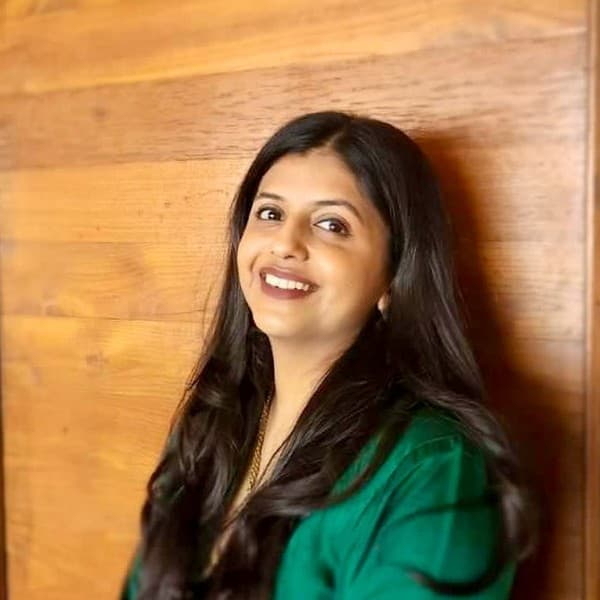
In 2013 she started White Print, India's first English lifestyle magazine in braille. Every month since, it has carried politics, sport, travel, food and fiction to readers who had been offered almost nothing to read for pleasure.
Upasana Makati cannot start a day without a newspaper. Some years ago that habit turned into a question. "I can't do without a physical newspaper every morning; what do they read for leisure?" she asked herself, thinking of people who cannot see.
She went looking and found newsletters from organisations, manuals and textbooks. Nothing to read for the pleasure of it. "It bothered me that there was no reading material available."
She took the question to the National Association for the Blind in Mumbai, and then to blind readers themselves. They said yes, they would read a magazine. Three months later she left her job. It took eight months to register the title, with no team to share the paperwork.
The first issue
White Print came out in May 2013: 64 pages in braille, in English, on lifestyle and culture. It was, and is, a magazine in the ordinary sense of the word: politics, sport, entertainment, travel, food, short stories. It is printed at the National Association for the Blind and posted to readers across India.
Before launch she wrote to more than 200 companies about advertising. One replied. Raymond took five pages in the first issue, enough to pay for it. Later, Coca-Cola ran an advertisement that played its anthem when a reader opened the centre spread.
Not a charity
White Print was set up to pay its own way, from subscriptions and advertising, in a field most people file under charity. That has meant teaching brands that a braille advertisement is words, not pictures, and finding readers one by one: individuals, schools, libraries, hospitals, old-age homes and colleges.
Running the magazine showed her something else. The shortage of books was real, she says, but people's ideas about disability were usually the bigger problem.
Books for children
So she began earlier, with children. In 2016 she launched Tactabet, braille alphabet books to touch, in English and Hindi. Then came picture books on inclusion: Look Out, Look Within, Flowers for Sunaina and, with Upasana as the author, Run Saba Run.
Today she also advises startups and companies on diversity and inclusion, carrying more than a decade of White Print into rooms that have never met a braille reader.
On the record
The Ministry of Women and Child Development gave her the First Lady Award in 2018. She has been named in Forbes India 30 Under 30 and Fortune India 40 Under 40, and among the Rising Talents of 2019 at the Women's Forum for the Economy and Society in Paris.
She describes what drives her in one line: making the world a little more inclusive every day.
“The core vision of making the world a little more inclusive every day is what drives me each day.”